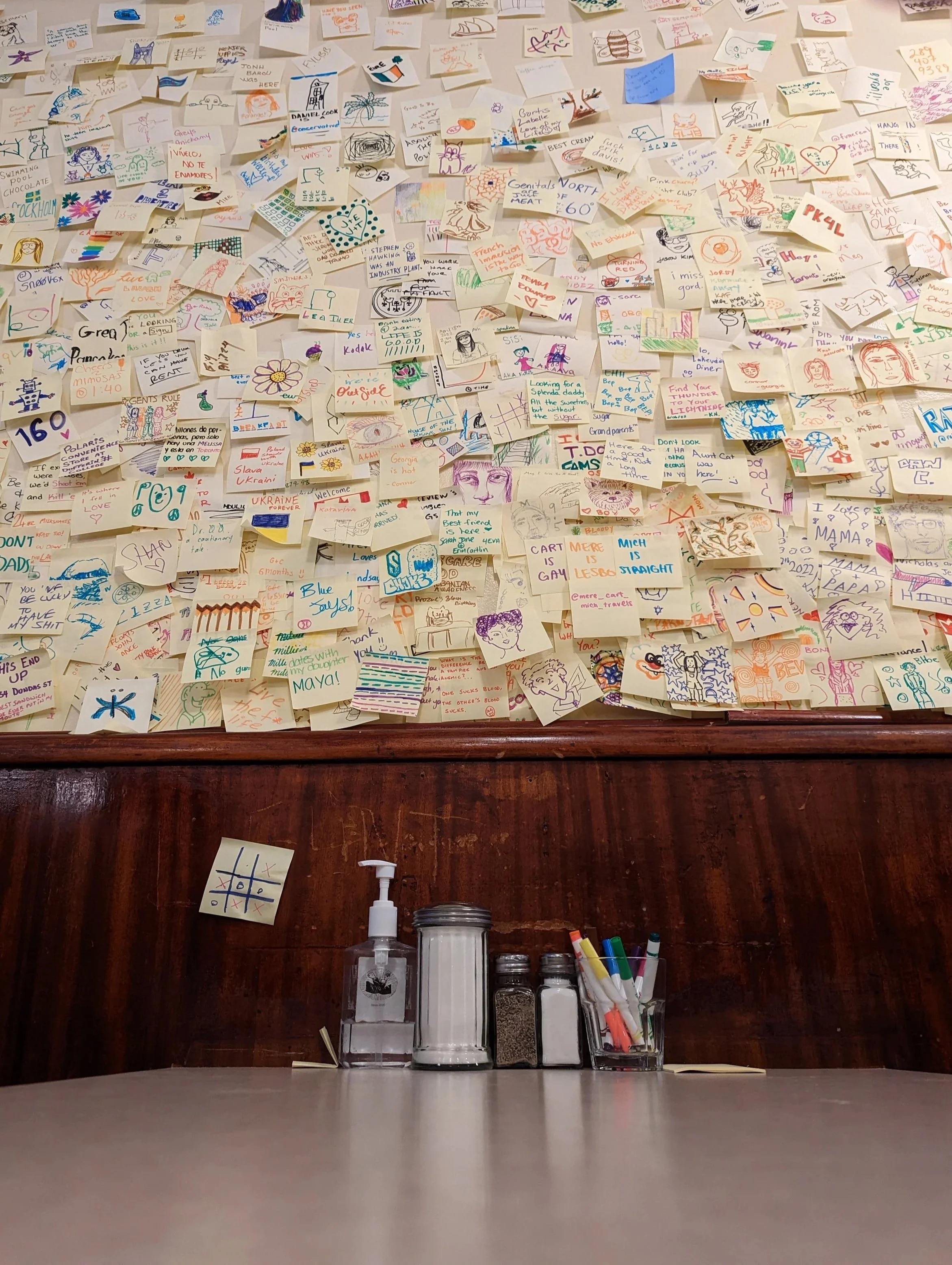
Always Open: The Lakeview Diner
The booths at the Lakeview Diner used to be terrible. The black vinyl seats, cracked by age and vandalism, squeaked unfavourably under the heat of your ass. Long hat racks affixed themselves like shiny giraffes at the corners of the booths, harkening back to a time when you’d take your fedora off before splitting a milkshake with your favourite gal.
It had a renovation a few years ago, a story of betrayal for another time. The booths were reupholstered with new brown leather, but the building itself still shows its age. Gone are the stucco-tiled walls, once yellowed under grease and winter steam, replaced now with a chic wall of mirrors meant to make the space feel bigger than it is. The tables are eternally sticky, lacquered from years of spilled milkshakes. The washrooms are covered in Sharpie ink and look like the set of every movie about a rockstar junkie, no matter how many times they paint over them. The bar is comfortable, drafty right by the door, often housing a bartender who looks overworked and tired, disinterested in making their eightieth six-dollar mimosa of the day. Outside, the red neon light beckons to the outsider like a beacon in the window, suggesting safety, shelter: you are welcome, you are here.
I walk in, greeted by a waiter who is either too friendly, too quirky, or too hungover, and more often than not, they tell me “wherever I want.” I’ve come to know these people by name. Petar and Siraj trade jokes and stories about customers as they pass the time through their shifts. I make my way to the far end, around the corner from the waiter’s station, and sit facing the windows, getting a clear view of Dundas Street through glass that never quite clears. They know me here, and nine times out of ten, a coffee pot and a small container of milk make their way over without me asking. I take off my jacket, pull out a book, take out a pen, and feel myself melt into the seat.
It’s the only place in this city where I really feel at home.
This place has been around for as long as I can remember. I remember sitting here during exam season at two in the morning, pouring over notes. I remember skipping afternoon classes and sharing milkshakes here in the summertime. There isn’t a time in my life I can point to where the diner isn’t present. I remember huddling in during snowstorms, warming up over apple pie and hot coffee. I remember coming here to cry after my heart was broken, or to mark the quiet moments when it started to heal. The eternal answer to hangouts, meet-ups, everything in between: So, Lakeview?
I think I bring people here because it’s always here. It’s a slow, constant reminder of the past and how it persists. The Lakeview has been around since the thirties, running as a twenty-four-hour diner since the forties. Factory workers on overnight shifts would stop in for dinner, and in many ways, it’s still that place. A haven for sleepless souls making their way across Dundas or down Ossington, looking for a cheap meal, some warmth, maybe just to feel a little less alone. While the surrounding area fills with trendy bars and taverns, dance clubs and boutique shops, leases ending and changing faster than I can keep up, the diner remains. And I can understand why.
The diner has become a hub for nostalgia, a place we’ve assigned meaning to through collective memory and repeated use. A kind of third space, one of the last, where we meet to talk about life, work, and everything in between, breaking proverbial bread as we connect over food.
Diners have always been a key setting, a representation of collaboration and connection. Much like what Le Corbusier attempted with social condensing in housing, diners do so organically. They bring together people from entirely different spheres into one place. Some come for the food, some for the atmosphere, some for the nostalgia, but they all come, and they’re all here. Think about pop culture: Pulp Fiction opens with a diner conversation that turns into a robbery; When Harry Met Sally... gives us an iconic sandwich scene; Goodfellas stages quiet power in one. Childish Gambino uses one as the set for “Sweatpants.” Pop’s in Archie Comics is where everything happens. It’s not just a restaurant. It’s an institution, a place where people and ideas collide. Add good food and decent music, and you have a quiet hotbed of connection.
I meet people here to discuss art, projects, things that feel too loud in my head. I meet people after comedy shows, after plays. We talk about everything from postmodern artists to Hollywood gossip. I come here to talk about Ernest Hemingway, and I come here to cry. Highbrow meets lowbrow here. Pretension meets blue-collar colloquialism, and neither one cancels the other out. That’s what makes diners special. As the city becomes more fragmented into social classes, enclaves, and curated spaces, it’s places like this that still allow people to meet in the middle.
The Lakeview, then, is more than a place to get an infamous apple pie milkshake. It’s a place where people come to make memories, to sit inside nostalgia, to carry forward the experiences of the people they’ve loved and lost. It becomes a quiet catalyst for interaction in an increasingly isolated city. Maybe that sounds like too much to put on a diner. But places like this have always held more than they should.
And it’s here, under the red neon light bleeding in from the window, with a bottomless cup of coffee and my purple pen in hand, that I open my notebook and try to make sense of the noise outside the doors.